
24/7 Customer Care
(312) 767-3227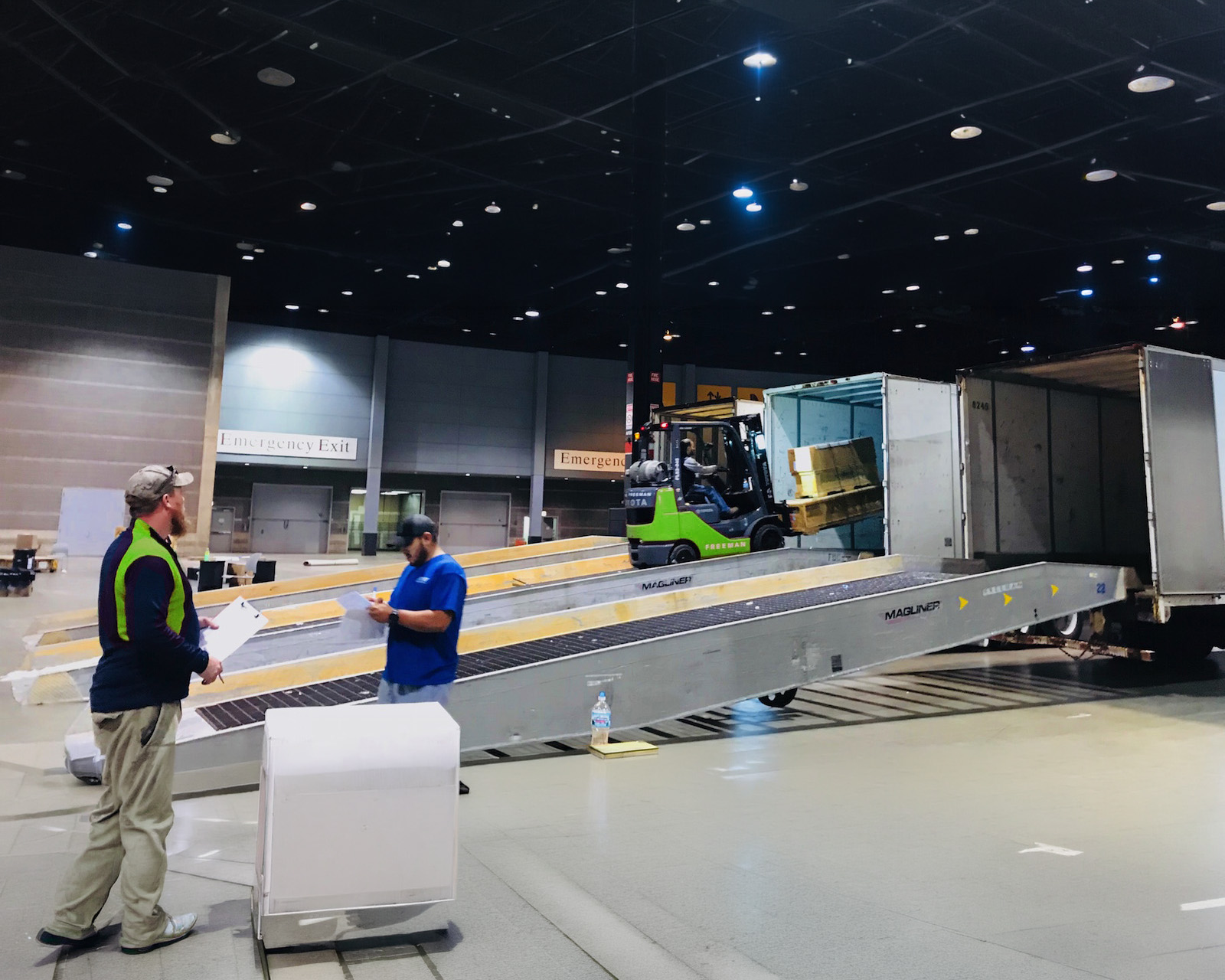
7 Trade Show Shipping Mistakes That Cost Exhibitors Money

Trade show freight problems rarely come out of nowhere. Almost every one of these outcomes traces back to a predictable, avoidable mistake made days or weeks before move-in.
Here are the seven that cost exhibitors the most, and exactly what to do instead.
Mistake 1: Using a General Freight Carrier for a Trade Show Shipment
This is the most common and most expensive mistake in trade show logistics. General carriers don't understand marshalling yards, targeted move-in windows, or show decorator requirements. They treat your exhibit like any other delivery, because to them it is.
The consequences show up at the show: a driver who checks in at the wrong location, doesn't have the right documentation ready, misses the targeted window and triggers overtime drayage surcharges, or simply can't navigate the marshalling yard process at a large convention center.
What it costs you: Overtime drayage surcharges of 25–50%, carrier detention fees from marshalling yard delays, and in worst-case scenarios, freight that doesn't make it to the floor before move-in closes.
The fix:
Use a freight partner with demonstrated trade showexperience — one who confirms the marshalling yard procedures, knows thetargeted window, and manages driver instructions before the truck departs.
Mistake 2: Shipping Multiple Small Packages Separately
Most shows charge a minimum drayage fee per shipment (typically 200 lbs or 2 CWT). If you send ten separate packages, each weighing 20lbs, you're paying the 200-pound minimum ten times for 200 lbs of actual freight. That's five times what it should have cost.
This mistake is especially common with promotional materials, AV equipment accessories, and marketing collateral that ship from different vendors or locations. Each arrives as a separate shipment and gets assessed a separate minimum.
What it costs you: Drayage minimums on every separate shipment, often adding hundreds of dollars to your material handling invoice that had nothing to do with weight.
The fix:
Consolidate everything. Get exhibit components, graphics, giveaways, AV accessories onto a single pallet or into a single crate before pickup. One shipment means one drayage minimum.
Mistake 3: Ignoring the Targeted Move-In Window
At targeted shows, each exhibitor is assigned a specific dateand time slot for move-in based on their booth location. This isn't a suggestion. It's a logistics mechanism that allows the venue to sequence hundreds of deliveries efficiently. Freight that arrives outside its assigned window gets processed after all on-target shipments, and almost always during overtime.
Many exhibitors don't realize they've been assigned a window, or assume it's flexible. It is not.
What it costs you: Off-target drayage surcharges of 25–50% above base rate, plus potential carrier wait time charges if the driver has to hold at the marshalling yard while on-target trucks are processed first.
The fix:
Pull your targeted move-in assignment from the exhibitor services manual as soon as it's available and build your freight schedule backward from that date and time — not from your preferred pickup date.
Mistake 4: Inaccurate or Incomplete Bill of Lading
The Bill of Lading is the most critical document in a tradeshow shipment. It needs to include the show name, venue address (advance warehouse or showsite), your booth number, the general service contractor's name, and accurate consignee information. Missing or incorrect details create problems at the advance warehouse and on the show floor that take time to resolve — time you don't have.
A BOL that lists the wrong advance warehouse address routes your freight to the wrong facility. A BOL without a booth number delays floor delivery. These aren't edge cases — they happen at nearly every large show.
What it costs you: Misdirected freight, delivery delays, additional handling fees for correction routing, and setup time you can't recover.
The fix:
Review the BOL against the exhibitor services manual for every shipment. Don't leave documentation to the carrier — verify it yourself or with your freight partner before the truck moves.
Mistake 5: Sending Uncrated or Blanket-Wrapped Freight When Crating Is Possible
Drayage rates are not flat across freight types. Crated freight receives the lowest CWT rate. Blanket-wrapped or uncrated freight can trigger special handling surcharges of 35–55% above the base rate, because it requires additional labor and equipment to move through the venue safely.
Exhibitors using blanket-wrap for cost savings on transportation often spend more on the drayage end than they saved on the freight leg — negating the benefit entirely.
What it costs you: Special handling surcharges of 35–55% above base drayage rate on every piece that arrives uncrated.
The fix:
Invest in purpose-built shipping crates for exhibit components you ship repeatedly. The upfront cost typically pays for itself within one or two shows in drayage savings alone.
Mistake 6: Forgetting to Plan Move-Out Before the Show Starts
Most exhibitors focus intensely on getting freight to the show. Move-out is an after thought — until they're standing on the show floor at close with packed crates, no carrier confirmed, and the threat of forced freight looming.
Forced freight occurs when an exhibitor's carrier doesn't check in at the marshalling yard within the designated move-out window. The show decorator routes the freight by their own preferred carrier at non-discounted rates — and the charges are billed directly to the exhibitor.
What it costs you: Forced freight charges can be 2–3 times standard freight rates. On a full exhibit build, this is a significant unexpected expense with no room to negotiate.
The fix:
Confirm outbound carrier and move-out pickup at the same time you book inbound freight. Complete and submit the Material Handling Agreement before the show floor closes. Do not leave move-out planning until move-in day.
Mistake 7: Booking Freight Too Late
Everything in trade show freight is easier when it's booked early. Advance warehouse options are accessible. LTL consolidation pricing is available. The freight partner has time to confirm all show-specific requirements. And if something goes wrong — late exhibit production, a changed show date, a vendor delay — there's time to adapt.
Exhibitors who wait until two weeks before the show have one option: expedited freight at premium rates, often with carriers who have no trade show experience and minimal availability.
What it costs you: Expedited ground and air freight rates that can be 3–5x standard rates, on top of the stress of managing a time-critical logistics problem with no buffer.
The fix:
Book your freight partner 6–8 weeks before move-in. For large, complex shows — CES, SEMA, HIMSS, any McCormick Place event — book earlier. The earlier you're in, the more options you have and the lesseverything costs.
The Pattern Behind Every Mistake
Every mistake on this list has the same root cause: treating trade show freight like general freight. Different rules. Different documentation. Different deadlines. Different consequences for getting it wrong. The exhibitors who avoid these mistakes consistently are the ones who work with a freight partner who was built specifically for this environment —not one who figures it out as they go.
More from Exhibitway
More From exhibitway Logistics

The freight partner
built for trade shows.