
24/7 Customer Care
(312) 767-3227
Advance Warehouse vs. Direct to Show: How to Choose the Right Option for Your Exhibit

Every exhibitor faces the same question before each show: do you ship to the advance warehouse, or direct to the show floor? The answer isn't always obvious, and choosing wrong can mean missed windows, surprise surcharges, or freight that isn't where you need it when move-in begins. This guide breaks down both options so you can make the right call every time.
What Is Advance Warehouse?
The advance warehouse is a storage facility designated by the show's general service contractor (GSC) — companies like Freeman, GES, or Shepard — where exhibitors can ship their booth materials before the event. Most shows allow freight to arrive 30 days or more before move-in begins.
When you ship to the advance warehouse, the GSC receives your freight, stores it, and stages it for delivery to your booth space when move-in opens. Your materials are already at the venue — or very close to it — before you ever arrive on-site.
What Is Direct to Show Shipping?
Direct to show — also called showsite shipping — means your freight is delivered directly to the convention center or venue during the official move-in window. There's no advance storage period. Your carrier coordinates delivery during the specific dates and times assigned by show management, often through a marshalling yard where trucks are staged before being dispatched to the loading docks.
Advance Warehouse: Pros and Cons
The Case For It
- Peace of mind before show week: Your materials are confirmed at the venue well before move-in begins, giving you time to address any issues.
- More shipping flexibility: You can use LTL carriers and standard ground service. No need for expedited options or tight timing.
- Earlier setup access: Freight shipped to the advance warehouse is usually among the first to reach the show floor when move-in opens.
- Reduced risk of carrier detention: Unlike showsite delivery, advance shipments avoid the marshalling yard wait times that can generate detention charges at large shows.
The Trade-Offs
- Higher drayage rates: Advance warehouse shipments typically incur drayage fees approximately 25–30% higher than direct-to-show, because freight is handled twice: once at the warehouse and again onto the floor.
- Strict receiving windows: Ship too early and your freight may be refused. Ship after the window closes and you'll face surcharges. The window is not flexible.
- Documentation must be perfect: Any error in the Bill of Lading, consignee address, or freight classification at an advance warehouse creates problems that compound before show day.
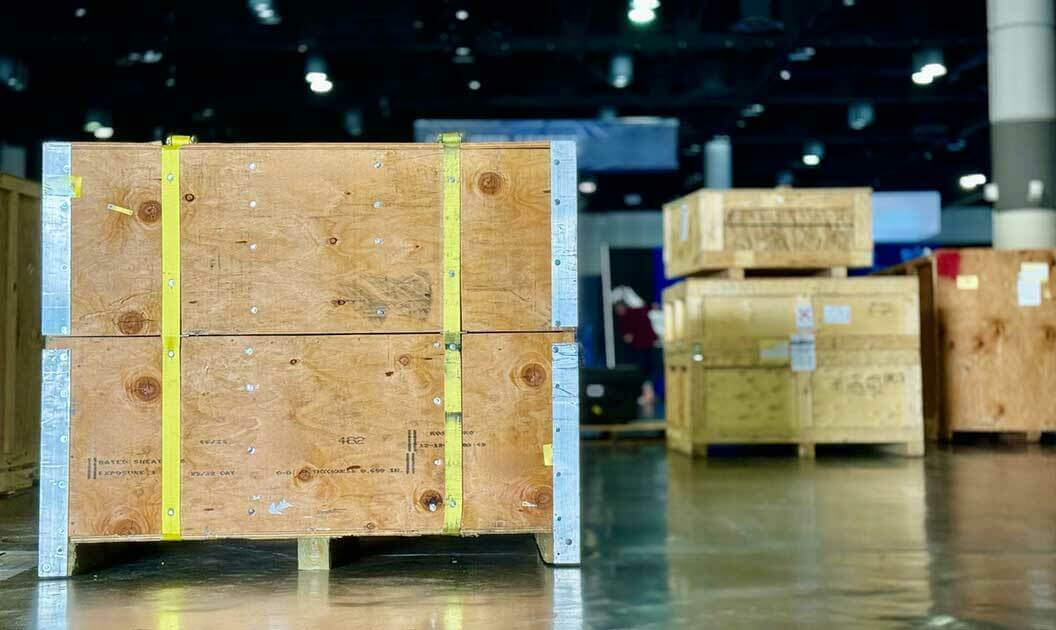
Direct to Show: Pros and Cons
The Case For It
- Lower drayage fees: Direct to show freight is handled once at the venue, which typically results in lower material handling charges.
- Flexibility for last-minute changes: If exhibit materials are changing or being updated close to show time, direct shipping allows for later departure dates.
- No advance storage fees: You avoid any additional warehousing charges that some shows apply to advance freight.
The Trade-Offs
- Tight, non-negotiable windows: Direct-to-show delivery windows are narrow. Miss the assigned target time and your freight goes to the back of the queue, often incurring overtime surcharges of 25% or more.
- Marshalling yard complexity: Large shows require carriers to check in at an offsite marshalling yard, which can mean significant wait times. Carriers unfamiliar with this process frequently miss their window.
- Higher stakes on move-in day: If your carrier has a problem (traffic, mechanical, weather) there's no buffer. Your exhibit either arrives on time or it doesn't.
Which Option Is Right for You?
The Exhibitway Rule of Thumb
- If you're more than two weeks out from move-in and your exhibit is ready to ship: go advance warehouse.
- If your exhibit is still in production and time is tight: plan direct, but lock in a carrier that knows the show floor.
Here's how to think through the decision:
- How ready is your freight? If your exhibit is built and ready to go with time to spare, the advance warehouse gives you the safest path to move-in. If you're still waiting on components or graphics, direct-to-show preserves your timeline flexibility.
- How complex is the show? Large shows with thousands of exhibitors (Like CES, SEMA, HIMSS, McCormick Place events) have the most logistically demanding marshalling yard processes. For these shows, advance warehouse shipping removes a significant variable.
- What's your drayage budget sensitivity? If material handling costs are a significant line item, the lower drayage rate on direct shipments may justify the tighter timeline. Run the numbers both ways before deciding.
- Is your carrier show-experienced? This is the variable most exhibitors underweight. A carrier unfamiliar with marshalling yards, targeted move-in windows, and show floor documentation will struggle with direct-to-show delivery. The advance warehouse removes that risk.
The Bottom Line
Neither option is universally better. The advance warehouse trades slightly higher drayage for peace of mind and flexibility. Direct to show trades lower material handling costs for tighter timing and higher execution risk. The right answer depends on your specific show, your freight's readiness, and the capability of your freight partner.
What both options have in common: they require precise documentation, confirmed deadlines, and a freight partner who understands howtrade show logistics actually works. A carrier who doesn't know the difference between an advance window and a move-in window is a liability regardless of which option you choose.
More from Exhibitway
More From exhibitway Logistics
The freight partner
built for trade shows.